

Beyond Consumer Tech: Why Rugged Android Tablets Rule the Smart Warehouse
The Hidden Cost of Fragile Devices in Modern Warehousing
Warehouses are no longer simple storage facilities.
Today’s logistics environments operate as real-time data ecosystems powered by barcode scanning, inventory synchronization, route optimization, and mobile workforce coordination.
But while warehouse operations have become smarter, many businesses still rely on consumer-grade tablets never designed for industrial environments.
And that creates a growing operational problem.
Across high-volume fulfillment centers, cold-chain logistics hubs, and manufacturing warehouses, standard consumer tablets often fail under:
- Repeated drops from forklifts or pallets
- Dust-heavy inventory zones
- Extreme warehouse temperatures
- Continuous multi-shift usage
- Moisture exposure in loading docks
- Long operational hours without charging opportunities
As warehouse automation accelerates globally, device reliability is no longer an IT issue — it directly impacts operational throughput.
Why Consumer Tablets Struggle in Warehouse Environments
Consumer tablets are optimized for portability and entertainment.
Warehouse operations demand something entirely different:
| Warehouse Requirement | Consumer Tablet Limitation |
|---|---|
| 24/7 operational uptime | Battery degradation |
| Frequent handling with gloves | Poor touch responsiveness |
| Drop resistance | Fragile housing |
| Dust & moisture exposure | Limited sealing protection |
| Long lifecycle deployment | Short product refresh cycles |
| Enterprise device management | Limited industrial integration |
According to multiple industrial mobility studies, accidental device damage remains one of the leading causes of workflow interruption in warehouse operations.
Even a single broken device can create cascading delays:
- inventory mismatches
- scanning interruptions
- picking inefficiencies
- delayed outbound shipments
In high-throughput logistics environments, minutes matter.
The Rise of Rugged Android Tablets in Smart Warehousing
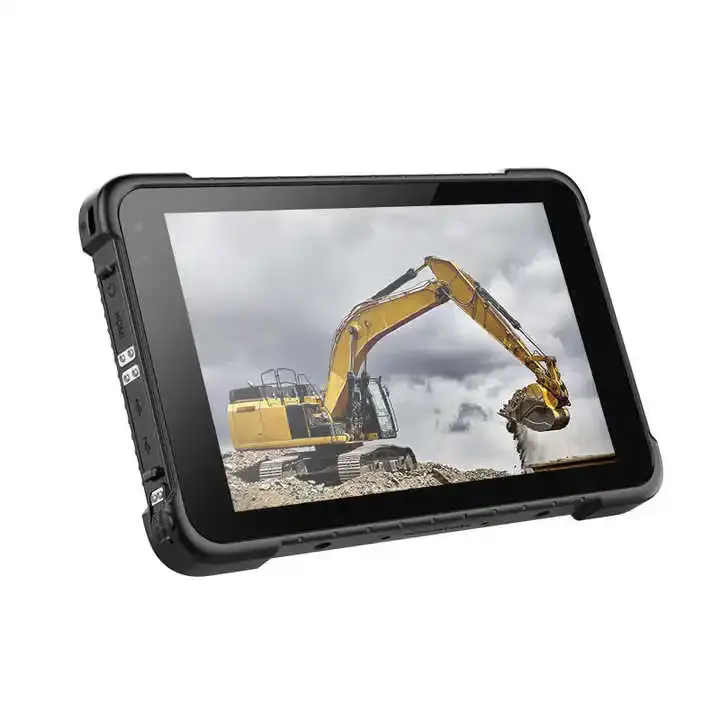
This is why more logistics operators are shifting toward rugged Android tablets purpose-built for industrial mobility.
Unlike consumer electronics, rugged warehouse tablets are engineered around operational continuity.
Key industrial-grade features typically include:
- Reinforced anti-shock housing
- IP-rated dust and water resistance
- Wide-temperature operation
- High-brightness displays for industrial lighting conditions
- Long battery endurance with hot-swap support
- Barcode/RFID integration
- Stable wireless connectivity across large facilities
For warehouse managers, the value is not simply “durability.”
The real value is workflow stability.
Lower Device Failure Rates Mean Higher Operational Continuity
One of the biggest reasons rugged tablets outperform consumer devices is dramatically lower hardware failure rates.
In large-scale logistics deployments, consumer tablets often require:
- frequent screen replacements
- charging port repairs
- battery servicing
- early hardware replacement cycles
Industrial rugged tablets significantly reduce those incidents because they are designed for repetitive operational stress.
In practical terms, this means:
✅ Fewer device replacements
✅ Less downtime for warehouse staff
✅ Lower IT maintenance workload
✅ More predictable operational performance
For multi-site logistics operations, reducing device failure rates can directly improve labor efficiency and reduce hidden operational costs.
Rugged Tablets Improve Warehouse Turnover Efficiency
Warehouse speed increasingly depends on mobile data accuracy.
From receiving to picking to outbound fulfillment, every workflow stage relies on real-time synchronization between workers and warehouse management systems (WMS).
Rugged Android tablets improve operational flow by enabling:
Faster Inventory Updates
Workers can scan and synchronize inventory instantly without returning to fixed terminals.
Reduced Picking Errors
Integrated barcode and RFID workflows improve accuracy during order fulfillment.
Real-Time Route Optimization
Forklift operators and mobile workers receive live task updates across warehouse zones.
Continuous Shift Operations
Long battery endurance supports extended operational cycles without workflow interruption.
The result is a measurable improvement in:
- order processing speed
- inventory visibility
- labor coordination
- warehouse throughput
For logistics operators facing rising e-commerce demand, these efficiency gains directly impact fulfillment capacity.
Why Android Is Dominating Industrial Mobility
Another major shift happening across smart warehousing is the growing adoption of Android-based industrial ecosystems.
Compared with closed consumer platforms, Android offers:
- Greater hardware flexibility
- Easier enterprise customization
- Better compatibility with warehouse software ecosystems
- Lower deployment costs at scale
- Wider accessory integration options
For warehouse IT teams, Android rugged tablets provide a balance between operational flexibility and enterprise scalability.
This is especially important for:
- 3PL providers
- cross-border logistics operators
- smart manufacturing warehouses
- automated fulfillment centers
Build Quality Is Becoming a Strategic Logistics Decision
The warehouse industry is entering a new phase where hardware durability directly influences operational performance.
This is no longer just a “device purchasing” discussion.
It is now part of:
- labor optimization
- warehouse uptime strategy
- fulfillment reliability
- digital transformation planning
As smart warehouses continue evolving, the gap between consumer electronics and industrial-grade mobility solutions becomes increasingly visible.
And in demanding logistics environments, build quality is no longer a premium feature.
It becomes operational infrastructure.
Industrial Rugged Tablets Designed for Warehouse Deployment
For logistics operators seeking reliable industrial mobility solutions, rugged Android tablets designed for warehouse environments are becoming essential infrastructure tools.
At UHopestar, industrial tablet solutions are built specifically for demanding commercial deployment scenarios, including:
- Smart warehousing
- Fleet logistics
- Manufacturing operations
- Retail inventory systems
- Industrial automation environments
With reinforced hardware architecture, enterprise Android compatibility, and commercial-grade durability, rugged tablet deployments can help warehouses reduce device-related disruptions while supporting scalable operational growth.
Final Thoughts
The future of warehouse efficiency is not driven by software alone.
It also depends on whether frontline hardware can survive the realities of industrial operations.
As logistics networks become faster, smarter, and more automated, rugged Android tablets are increasingly replacing fragile consumer devices across warehouse environments worldwide.
Because in modern warehousing, operational continuity starts with build quality.