

How Smart Home Hub OEM Projects Choose Between AOSP and GMS Android Architectures
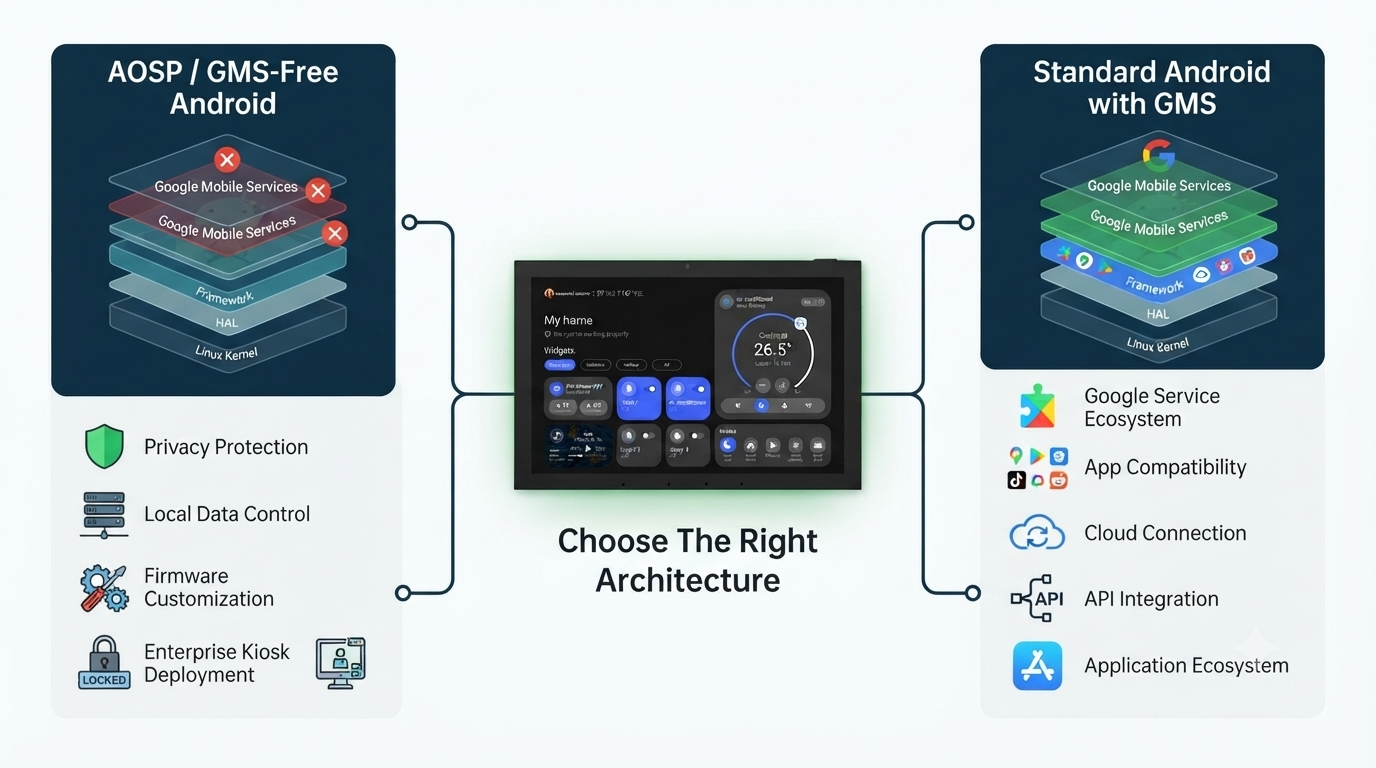
When companies develop a smart home hub, the Android system architecture is often decided much earlier than the hardware production stage.
At first glance, a home hub display may look like a standard touchscreen device. However, for many B2B projects, the display is not simply a screen with an operating system. It becomes a dedicated interface connecting software services, users, and connected home environments.
This is why some buyers begin asking deeper questions about Android architecture: Should the device use standard Android with Google Mobile Services (GMS)? Does the project require an AOSP-based system without Google services? How much control does the buyer need over software deployment and device behavior?
Three real home hub OEM requests from Norway, Belgium, and the United States provide useful examples. They do not represent the entire smart home market, but they show how different buyers evaluate system requirements based on their own deployment goals.
The important signal is not that every smart home project is moving toward de-googled display solutions. Instead, these requests show that buyers are becoming more specific about software control, application deployment, and device customization.
Why Some Smart Home Hub Projects Need More Control Over Android Systems
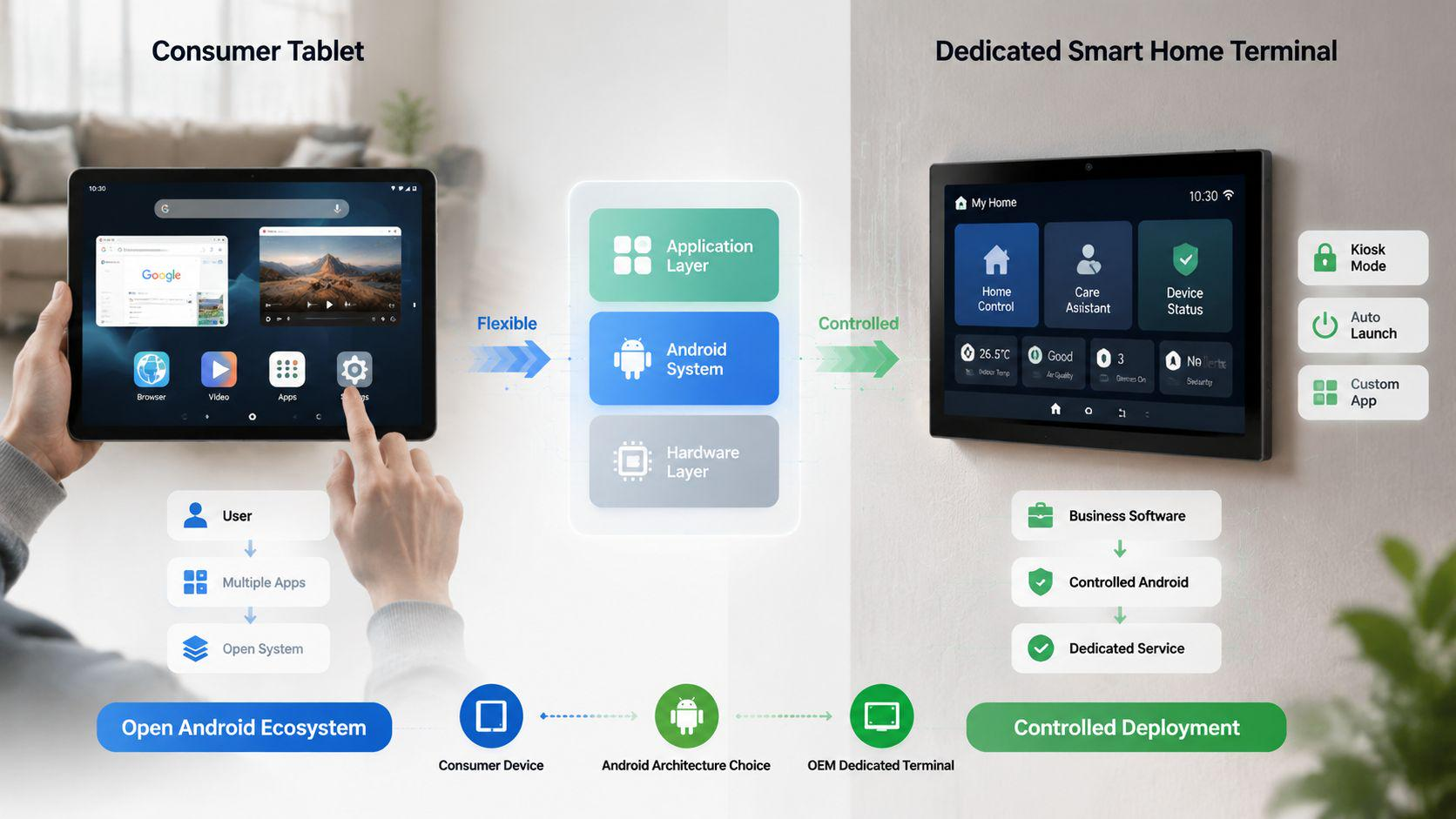
A traditional consumer tablet is designed around flexibility. Users install different applications, access online services, and interact with a broad ecosystem.
A dedicated smart home hub follows a different logic. For many OEM projects, the device has one primary purpose: running a specific application reliably in a controlled environment.
The buyer may need the display to start directly into their own software, prevent unnecessary user access, or maintain consistent behavior across deployed units. In these scenarios, Android architecture becomes a business decision rather than only a technical choice.
An AOSP-based solution can provide deeper control over the system environment, while a GMS-enabled Android solution provides access to Google's ecosystem and services. Neither option is universally better. The right choice depends on how the device will be deployed, maintained, and used.
This distinction is especially important for companies entering hardware from software backgrounds. A SaaS company building a dedicated smart display, for example, may care less about general Android functionality and more about whether the hardware can reliably deliver its software experience.
Three OEM Requests Show Different Reasons Behind Android Customization
These examples reflect real-world OEM discussions with buyers across different markets. Instead of focusing on individual companies, the comparison highlights how different project goals influence Android system choices, software deployment, and hardware customization requirements.
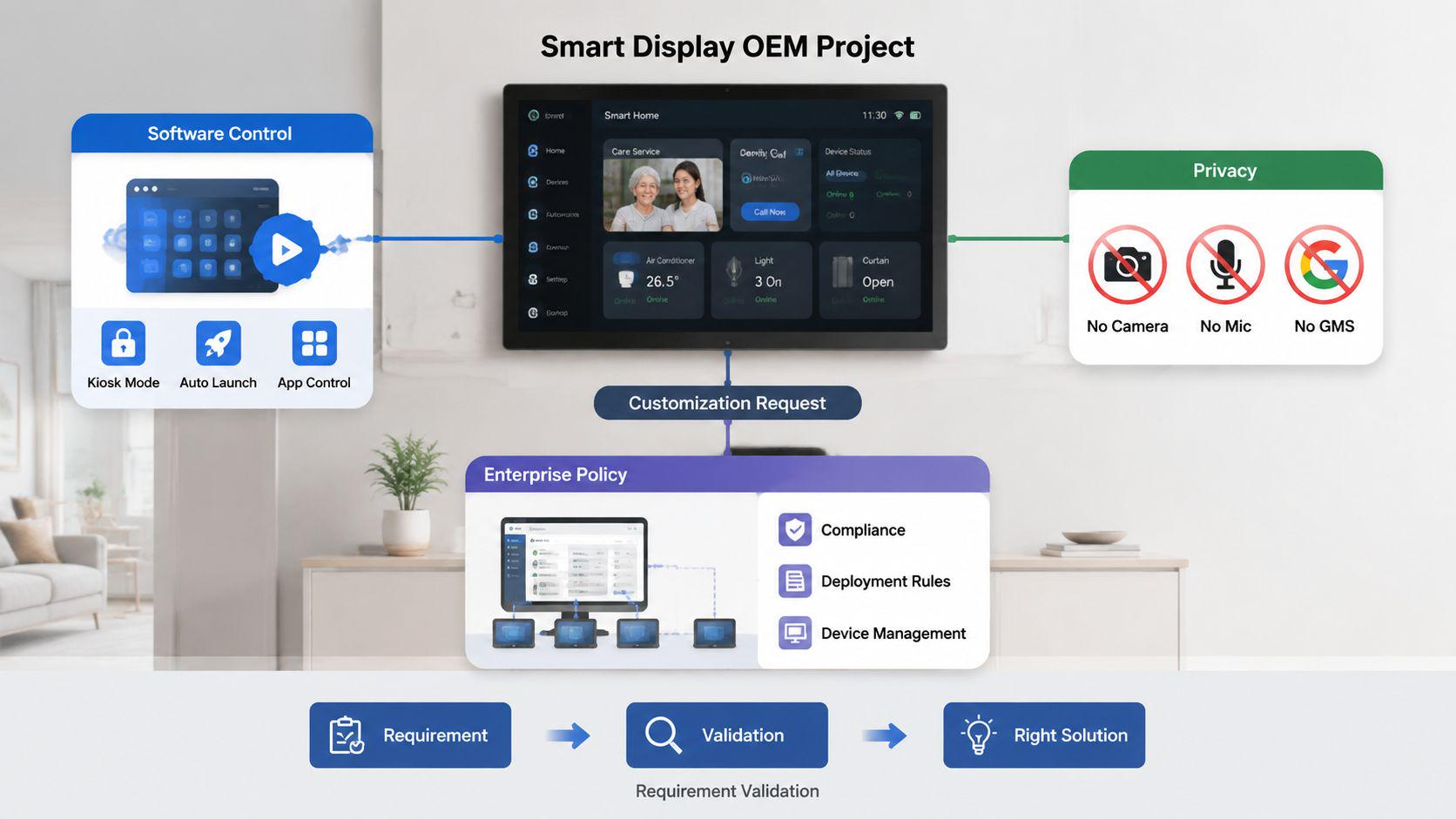
One Norway-based system integrator requested an AOSP-based display without GMS, together with hardware limitations such as removing camera and microphone components. The project also required kiosk mode with automatic APK launch.
This request clearly shows a preference for a controlled Android environment. The buyer was not looking for a general-purpose tablet but for a dedicated hardware terminal where the software experience could be managed from the system level.
However, the reason behind the request should still be verified during project discussions. A GMS-free requirement may relate to privacy expectations, application control, enterprise deployment policies, or other project-specific considerations.
The second project, from a Belgium-based elderly care solution provider, focused on different priorities. The requested features included 4G connectivity, WiFi, kiosk mode, and a simplified interaction experience.
Unlike the first project, this buyer did not explicitly request a de-Googled system. This difference is meaningful because it shows that privacy-focused Android customization is not automatically required for every smart home or elderly care application.
The third project came from a US-based SaaS company exploring hardware deployment for its software service. The main requirements included application pre-installation, kiosk deployment, and brand customization.
For software companies moving into hardware, the challenge is often not selecting a tablet specification. The bigger challenge is creating a reliable physical interface that extends their existing software platform.
Across these three examples, the common requirement was not necessarily de-Googled Android. The common requirement was greater control over how software runs on dedicated hardware.
The Right Android Architecture Depends on Who Controls the Software Experience
The decision between AOSP and GMS should begin with the application model, not the operating system preference.
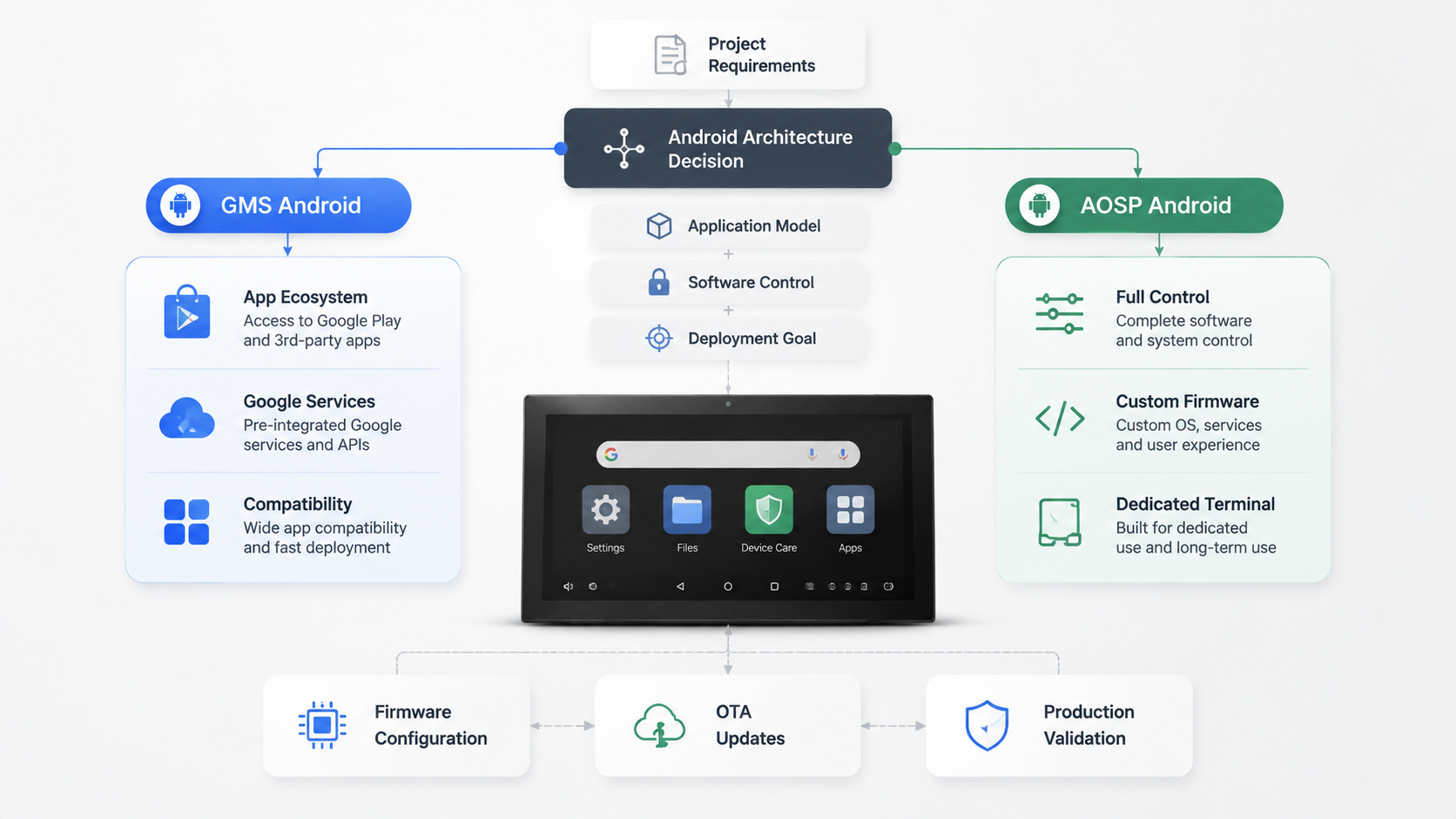
For projects that depend heavily on Google services, consumer applications, or the existing Android ecosystem, GMS-enabled Android may provide practical advantages because of broader application compatibility.
For dedicated terminals where the buyer controls the application environment, an AOSP-based system may offer more flexibility. This is especially relevant when the device needs customized startup behavior, restricted user access, or long-term software consistency.
The difference also affects the OEM development process. A customized Android project may involve more than changing the user interface. It can influence firmware configuration, system image management, application deployment workflow, OTA update strategy, and production validation.
For buyers, the question is therefore not simply:
"Can this supplier provide an Android tablet?"
The more important question is:
"Can this supplier support the complete hardware and software deployment model required by our project?"
Privacy Requirements Should Be Validated, Not Assumed
Requests such as "no GMS", "no camera", or "no microphone" often attract attention because they may indicate stronger privacy expectations.
However, the exact motivation should not be assumed.
In the three reviewed projects, only one buyer explicitly requested a GMS-free AOSP environment. The other two projects did not mention this requirement.
This means privacy-focused customization appears in specific buyer scenarios rather than representing a universal requirement for all smart home hubs.
For suppliers and buyers, early discussions should clarify whether the project requires a completely controlled Android environment, whether Google services are necessary, and whether hardware restrictions are related to privacy expectations, compliance considerations, or product positioning.
Validating these requirements early can reduce unnecessary engineering work and avoid expensive changes after development begins.
Kiosk Deployment Is Becoming a Foundation for Dedicated Smart Displays
Although the three buyers had different priorities, all projects shared a similar direction: the display needed to function as a dedicated service interface.
This is where kiosk mode becomes important. It enables automatic application launch, restricted user access, and a consistent experience after deployment.
For elderly care systems, smart home hubs, and software-driven hardware products, the display is no longer only an Android screen. It becomes part of a complete service system.
This also creates new requirements for OEM suppliers. Supporting these projects requires understanding not only hardware specifications but also software-hardware integration across development, manufacturing, and long-term operation.
Before Starting an OEM Smart Display Project, Define These Decisions First
Before requesting an Android display OEM solution, buyers should first clarify four project boundaries:
Whether the application depends on Google services, how much control is required over the Android system, whether privacy-related restrictions exist, and how the device will be managed after deployment.
These decisions directly influence the suitable hardware platform, Android architecture, customization scope, and supplier capability requirements.
A supplier evaluation should therefore go beyond processor, memory, or display specifications. Buyers should confirm whether the OEM partner can support system customization, application deployment, firmware management, and long-term product maintenance.
The three real requests discussed in this article do not prove that every smart home project requires a de-googled display. They demonstrate a more practical change: buyers are increasingly evaluating hardware based on how well it supports their software strategy.
For companies developing smart home hubs, elderly care displays, or software-driven hardware products, defining the right Android architecture early can reduce development risk and create a more reliable deployment path.
If you are planning an Android-based smart display project, defining the right system architecture early can help reduce development risks and avoid unnecessary customization costs.
Our team can help evaluate your application requirements, Android architecture options (AOSP or GMS), and hardware customization needs to identify a suitable deployment approach.
Contact our team to discuss your project requirements or submit your inquiry for a customized Android display solution.
Table of Contents
- Why Some Smart Home Hub Projects Need More Control Over Android Systems
- Three OEM Requests Show Different Reasons Behind Android Customization
- The Right Android Architecture Depends on Who Controls the Software Experience
- Privacy Requirements Should Be Validated, Not Assumed
- Kiosk Deployment Is Becoming a Foundation for Dedicated Smart Displays
- Before Starting an OEM Smart Display Project, Define These Decisions First