

Choosing a Tablet OEM for Your Channel: 5 Questions to Ask First

A tablet sample can prove that a device works. It cannot prove that the supplier can support the business after orders grow, customers require integration, or channel conflicts appear.
For a distributor moving from prototype evaluation to production scaling, this distinction matters. The decision is no longer only about choosing commercial Android tablets that meet a technical specification. It is also about understanding how the OEM handles supply, pricing, technical support,territory, and after-sales responsibility.
This tablet OEM buying guide channel focuses on five questions worth resolving before signing an OEM or distribution agreement. The goal is not to tell buyers that every supplier should offer identical terms. Instead, it provides a practical framework for testing what a supplier can commit to, what remains conditional, and what needs to be documented before the relationship moves into volume production.
Five Questions That Reveal How the OEM Relationship Will Work
Can the supplier maintain supply when your orders grow?
A sample order puts very little pressure on a manufacturing system. A production order can expose a completely different set of constraints.
Consider a distributor that completes testing of a 15.6-inch Android tablet and then receives a larger customer project. The question is no longer whether the sample can be delivered. The buyer now needs to understand whether the same configuration can be produced consistently, how long
production will take, and what happens if demand increases unexpectedly.
This is why supply stability should be discussed as a process rather than a promise. A buyer can ask how production schedules are confirmed, how key components are managed, how quality inspection fits into the lead time, and how delays are communicated.
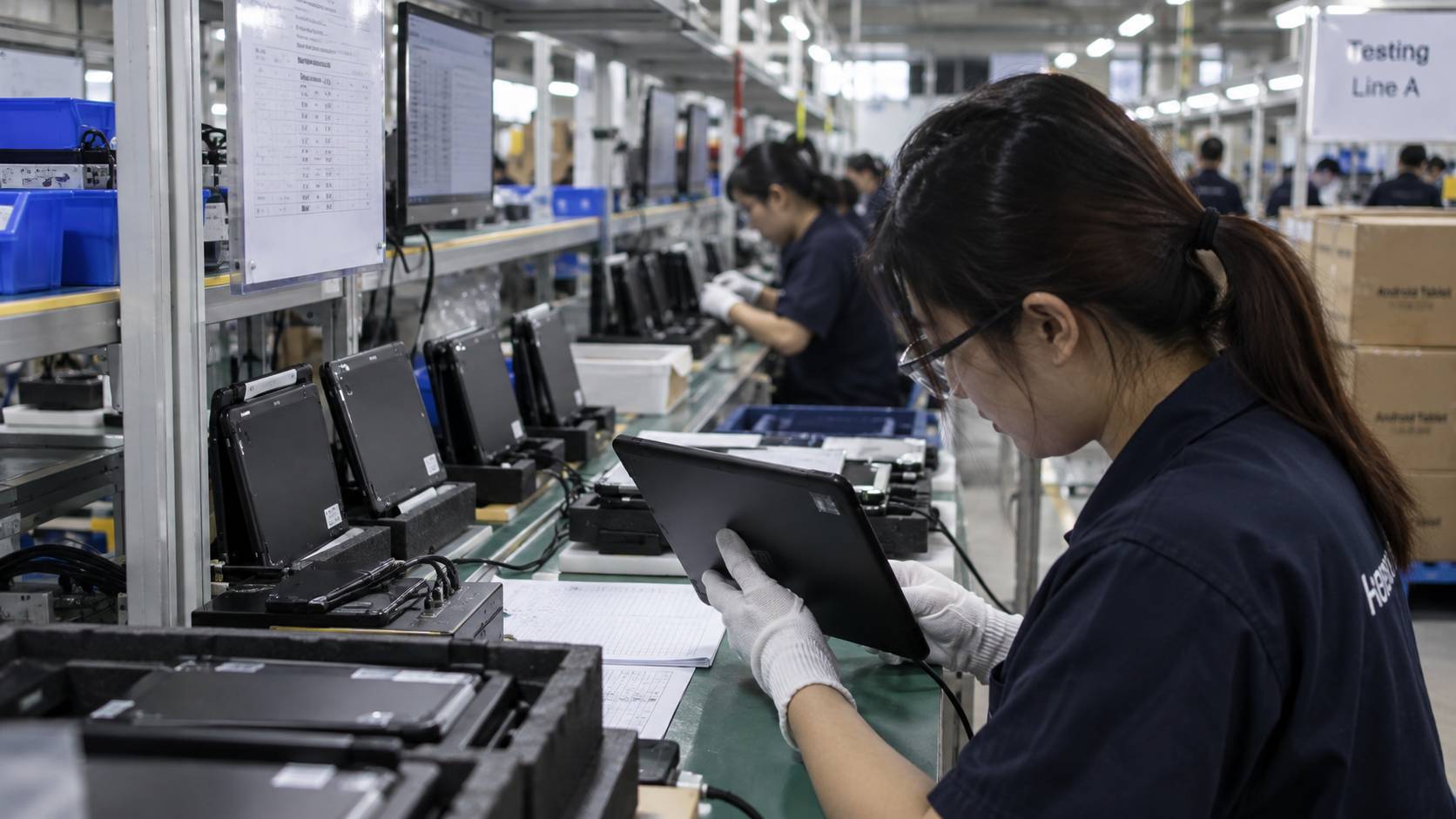
For a potential commercial Android tablet supplier, the useful evidence is not simply a statement that the factory has sufficient capacity. The buyer should be able to understand what happens between sample approval and the first larger production run.
Why the risk is invisible during sample testing: one or two units consume little capacity and rarely reveal component shortages, production scheduling conflicts, or the effect of a larger order.
Red flag: the supplier gives a fixed lead time but cannot explain what conditions could cause it to change.
A practical next step is to document the expected production configuration and lead-time assumptions before the first volume order. That gives both sides a reference point when the order moves beyond the prototype stage.
How will pricing work when costs and projects change?
A sample quotation is usually straightforward: one configuration, one quantity, one commercial discussion.
Channel pricing becomes more complicated when exchange rates move, component costs change, quantities increase, or a customer project requires a different configuration.
Suppose a distributor receives a quotation, spends several weeks developing an end customer, and then returns to the supplier after the project specification has changed. The important question is not simply whether the new price is higher. The buyer needs to understand which change caused the
new quotation and how previously discussed pricing is treated.That is the practical purpose of price protection.
A distributor does not necessarily need a fixed price forever. A manufacturer may genuinely be unable to guarantee pricing when component costs fluctuate. What matters is whether the supplier can define how changes are handled.
For an Android tablet OEM project, the buyer can also clarify which changes are considered standard configuration adjustments and which require a new quotation.
Why the risk is invisible during sample testing: a one-time sample quotation does not show how pricing behaves across repeated orders, changing quantities, or evolving project specifications.
Red flag: the supplier provides an attractive initial price but cannot explain quotation validity, price-change conditions, or treatment of existing projects.
For buyers evaluating an Android tablet OEM manufacturer, recording the product configuration alongside the commercial quotation makes later price changes easier to analyze.
What happens when the tablet has to work inside a larger system?
A standalone sample can work perfectly while the final deployment still encounters integration problems.
Commercial tablets may need to connect with software platforms, peripherals, access-control systems, POS applications, room-booking software, network environments, or customized mounting structures. A buyer therefore needs to test more than the device itself.
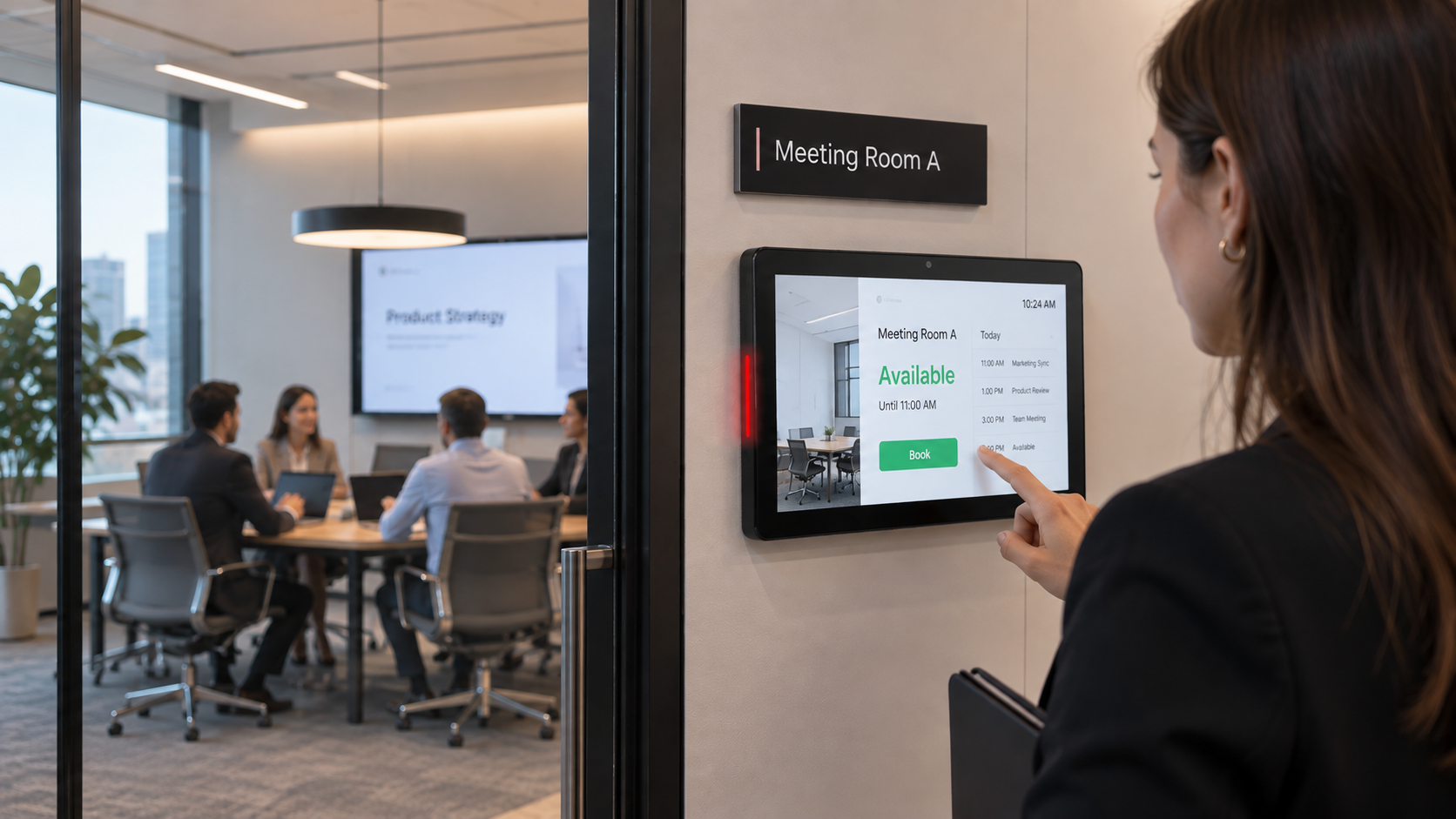
Imagine a system integrator testing a tablet for a customer deployment. The Android system runs normally, but the project requires a particular peripheral, communication interface, software configuration, or physical installation method. At this point, the value of an OEM relationship is determined partly
by how the supplier handles technical clarification.
This is where custom Android tablets and Android tablet customization become relevant search paths for buyers whose requirements go beyond a standard device.
The practical approach is to provide the intended deployment requirements before production: mounting method, software environment, peripherals, network conditions, operating temperature, and any required hardware changes. The supplier can then distinguish what belongs to the standard product from what requires configuration or engineering work.
Uhopestar products, for example, can be evaluated at this stage through specific configurations rather than through a general statement about customization. A buyer can start with a 10.1-inch commercial Android tablet, test the intended application, and then identify which requirements need to be changed before production.
Why the risk is invisible during sample testing: standalone functionality does not prove compatibility with the customer's complete hardware and software environment.
Red flag: the supplier describes customization broadly but cannot identify what can be modified or who is responsible for integration issues.
What territory rights will you actually receive?
“Distributor,” “authorized partner,” and “exclusive distributor” can represent very different commercial relationships.
The difference becomes visible after the distributor starts investing in a market.
Imagine a channel partner spends months developing customers in a market and later discovers that another seller is quoting the same products to one of those customers. The problem is not necessarily the existence of another distributor. The problem is that territory, customer ownership, or project protection may never have been clearly defined.
Before signing, a buyer considering becoming an Android tablet distributor should therefore separate product evaluation from channel-policy evaluation.

The relevant questions include whether the territory is exclusive, whether direct sales are permitted, whether existing accounts are excluded, and whether performance requirements affect the continuation of the arrangement.
Uhopestar's Android tablet partner program can be reviewed separately from individual product specifications. That separation is useful because a product page answers what the device is, while a partner program addresses how a potential channel relationship may be structured.
Why the risk is invisible during sample testing: there is no meaningful channel conflict while the buyer is still evaluating one device and has not invested in market development.
Red flag: “exclusive” appears in a sales discussion but the agreement does not define territory, exceptions, performance conditions, or customer ownership.
What happens when a production batch has a quality problem?
Returns are often discussed after the first problem occurs. That is usually too late. A sample can pass testing while a production batch later contains several units with a similar fault. At that point, the distributor needs more than a general warranty statement.
Consider a batch in which several deployed units show the same failure. The operational questions become specific: Who verifies the defect? Who opens the RMA? What evidence is required? Who handles transportation? Are units repaired or replaced? If several failures share the same cause, does the issue move into a batch-level investigation?
Before volume production, a buyer evaluating a supplier such as Uhopestar can ask the manufacturer to walk through this hypothetical RMA process. The exercise does not require the supplier to guarantee that every possible failure will be handled in one particular way. It establishes whether both sides understand how a problem would be investigated.
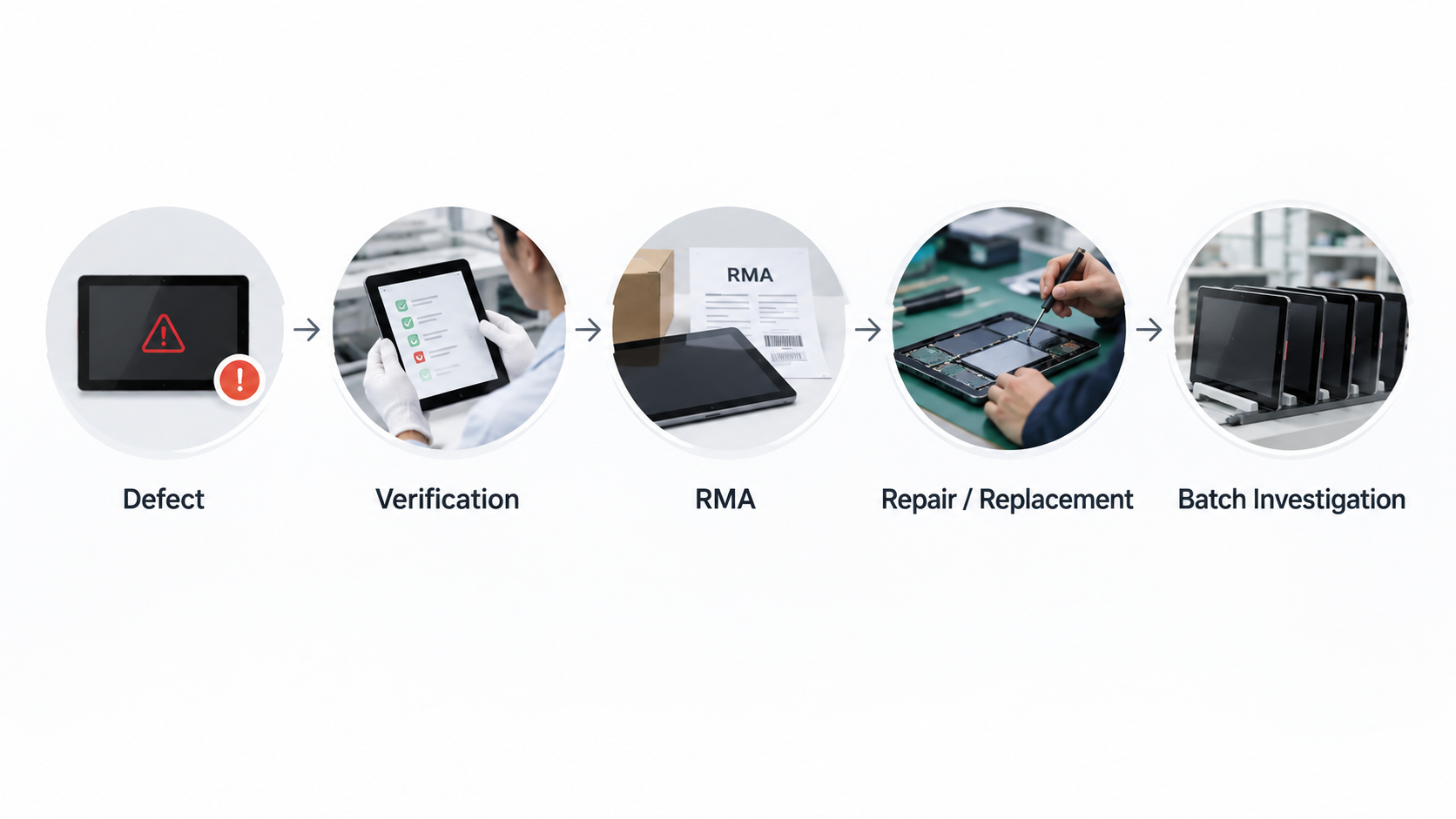
Why the risk is invisible during sample testing: a successful sample demonstrates the condition of the tested units but says little about the supplier's response to repeated failures across a production batch.
Red flag: the supplier describes warranty support but cannot explain defect verification, RMA handling, responsibility, or escalation.
What If the Supplier Won't Commit to Every Term?
Not every OEM will agree to every request from a new channel partner.
A manufacturer may be unable to guarantee a fixed annual price because component costs fluctuate. It may also avoid permanent territory exclusivity because its business model includes multiple partners or direct sales. Neither position automatically determines whether the relationship can work.
The more useful distinction is between “cannot guarantee” and “will not define.”
If a supplier cannot guarantee a fixed price, the buyer can ask how much notice will be provided, how confirmed orders are treated, and whether project quotations have a defined validity period.
If permanent exclusivity is unavailable, the discussion can move toward territory conditions, project registration, customer protection, or performance-based arrangements.
The problem is more serious when the supplier refuses to define the conditions at all. “We will discuss it when something happens” leaves the distributor carrying an undefined risk.
This is also where a potential commercial Android tablet partnership should be evaluated carefully. The buyer can review the available partner framework and then ask which specific commercial terms apply to its intended market and business model.
A strong supplier evaluation does not require every answer to be “yes.” It requires the buyer to know which answers are confirmed, which are conditional, and which remain unresolved.

Your Pre-Signing OEM Checklist
Before moving from prototype validation to volume production, record the five areas in a form that can be reviewed by both sides.
| Area | What to clarify | Evidence to keep |
| Supply stability | Capacity, lead time, component availability | Production confirmation |
| Price protection | Quotation validity and change conditions | Written quotation |
| Technical support | Integration scope and escalation | Technical confirmation |
| Territory rights | Territory, exclusivity, exceptions | Partner agreement |
| Returns policy | Warranty, RMA and defect handling | RMA / warranty terms |
For buyers comparing Android tablets for commercial applications, the same discipline can then be applied to product selection. Screen size, mounting method, Android configuration, connectivity, and customization should be evaluated against the actual deployment rather than selected independently.
Uhopestar's range provides different starting points for this process, from a 10.1-inch Android tablet to a 21.5-inch Android tablet. The purpose of reviewing these models at this stage is not simply to compare specifications, but to determine whether the product configuration matches the intended commercial application and the level of customization required.
For a buyer already preparing an OEM project, the next step is to document the required screen size, application, configuration, deployment environment, and expected purchasing stage before approaching the supplier.
If you are evaluating a commercial Android tablet project, feel free to contact Uhopestar for consultation on product configuration, OEM requirements, channel cooperation, and production planning.