

Rockchip RK3588 Explained: How Uhopestar Powers Edge AI, Multi-Display & High-Performance Android Devices
Why Uhopestar Chose RK3588 for Advanced Android Solutions
As edge AI, multi-display systems, and high-performance Android terminals become standard across commercial and industrial environments, hardware platforms must deliver more than raw computing power.
At Uhopestar, processor selection is driven by real deployment requirements—long operating hours, multi-task workloads, system stability, and future scalability.
That is why RK3588 has been adopted in selected Uhopestar Android tablets and intelligent terminals designed for edge AI, multi-screen applications, and industrial-grade use.
This article explains what RK3588 can do, and more importantly, how Uhopestar turns its capabilities into deployable commercial solutions.
1. Technical Fundamentals: Architecture That Supports Real-World Workloads
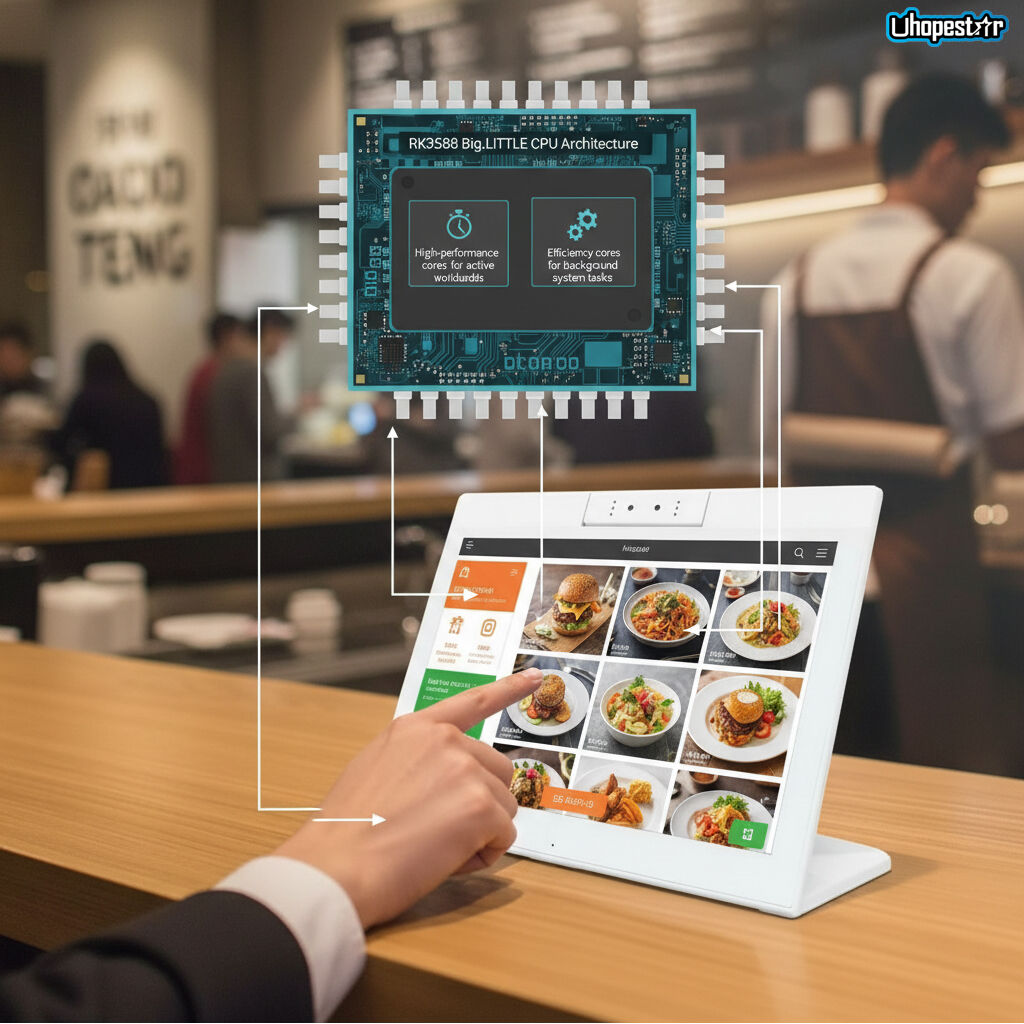
Big.LITTLE Architecture: Performance Where It Matters, Efficiency Where It Counts
RK3588 is built on ARM’s Big.LITTLE architecture, combining high-performance cores with power-efficient cores.
In theory, this enables task scheduling across different workloads.
In practice, its value depends on system-level implementation.
In Uhopestar’s RK3588-based Android tablets, performance cores are allocated to demanding tasks such as AI inference, high-resolution video decoding, and multi-display rendering, while efficiency cores handle background services and system operations. This architecture allows devices to maintain stable performance in continuous 24/7 commercial environments, rather than short consumer usage cycles.
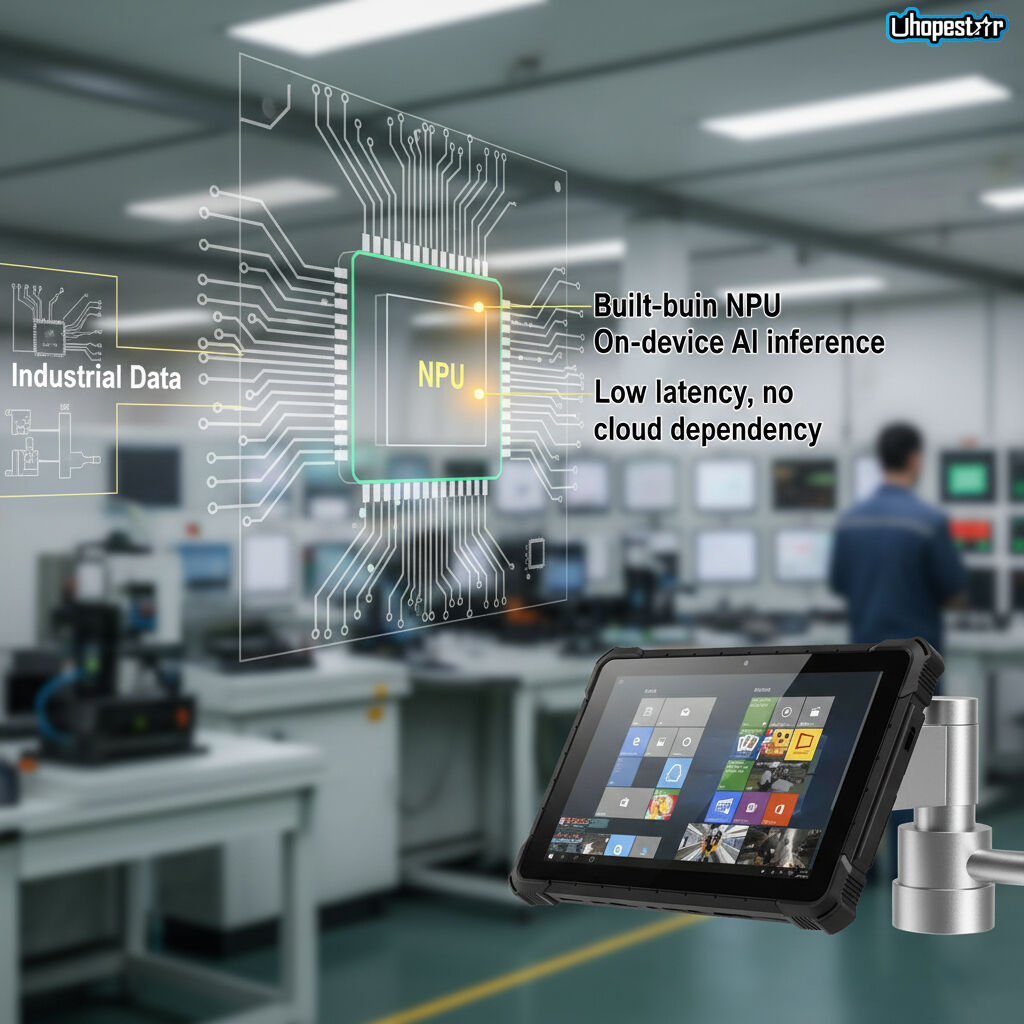
NPU Computing Power: Making Edge AI Practical on Android Devices
RK3588 integrates an onboard NPU, enabling AI inference directly on the device without relying on cloud computing.
For Uhopestar, this capability supports:
-
Local computer vision processing
-
Intelligent content control for commercial displays
-
Faster response times in industrial and automation scenarios
By integrating RK3588 into edge AI Android tablets and control panels, Uhopestar enables customers to deploy AI-powered applications while maintaining data privacy, low latency, and system independence from network conditions.
2. Application Enablement: From Chip Capability to Deployable Products
8K Video and Multi-Display Output in Commercial Environments
High-resolution video and multi-display output are increasingly required in modern commercial systems.
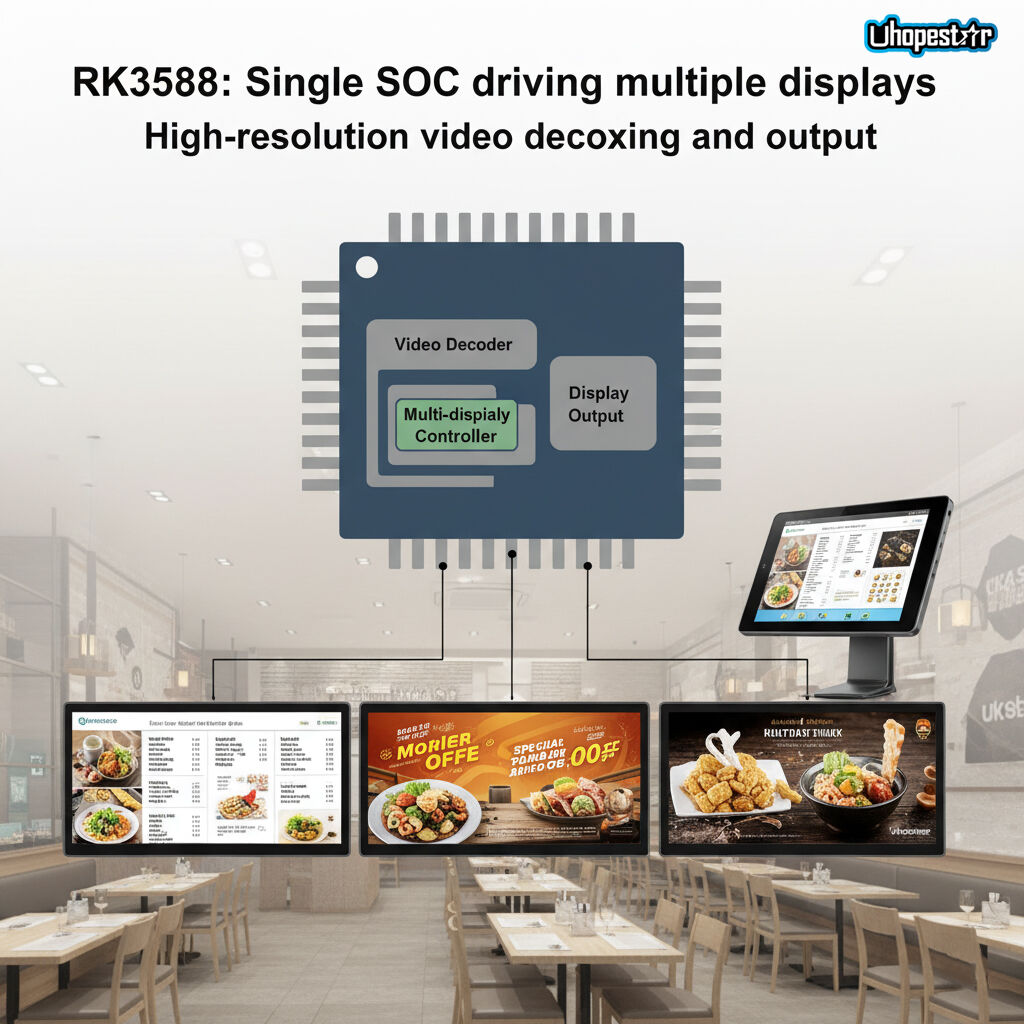
RK3588’s advanced video processing capability allows simultaneous decoding, rendering, and display output, which is essential for:
-
Multi-screen digital signage systems
-
Dual-screen POS and interactive terminals
-
High-resolution commercial display applications
Uhopestar integrates this capability into commercial Android tablets and multi-display terminals, ensuring that video performance remains stable even when combined with AI inference and user interaction.
Edge AI Across Industries: Practical Deployment Scenarios
Rather than targeting a single vertical, RK3588-based platforms are suited for multiple industries.
Uhopestar deploys RK3588 in Android products designed for:
-
Industrial environments: AI-assisted monitoring and control panels
-
Commercial displays: intelligent kiosks and interactive signage
-
Smart buildings and homes: centralized touch control tablets
These products process data locally, reducing system latency while maintaining reliable operation in environments where cloud access may be limited or inconsistent.
3. Industry Perspective: Edge AI Hardware Trends Toward 2026
Performance, Power Efficiency, and Multitasking Convergence
By 2026, edge AI hardware is expected to balance three priorities:
-
Sufficient AI performance at the edge
-
Controlled power consumption for fanless designs
-
The ability to run multiple workloads simultaneously
RK3588 aligns with this trend, and Uhopestar’s platform-level optimization ensures these capabilities translate into deployable, maintainable Android products, not just benchmark results.
Multi-Screen, Visual AI, and Industrial IoT Growth
Key growth areas for edge hardware include:
-
Multi-screen commercial systems
-
Visual AI in industrial automation
-
Intelligent IoT terminals with embedded AI decision-making
Uhopestar’s RK3588-based Android tablets are developed as long-term platforms, supporting these trends with stable hardware design and lifecycle planning.
4. Competitive Perspective: Why RK3588 Makes Sense for Uhopestar Products
RK3588 vs Snapdragon and NVIDIA Jetson
Different edge platforms serve different purposes:
-
Snapdragon platforms prioritize mobile ecosystems
-
NVIDIA Jetson targets high-end AI compute with higher power and cost requirements
-
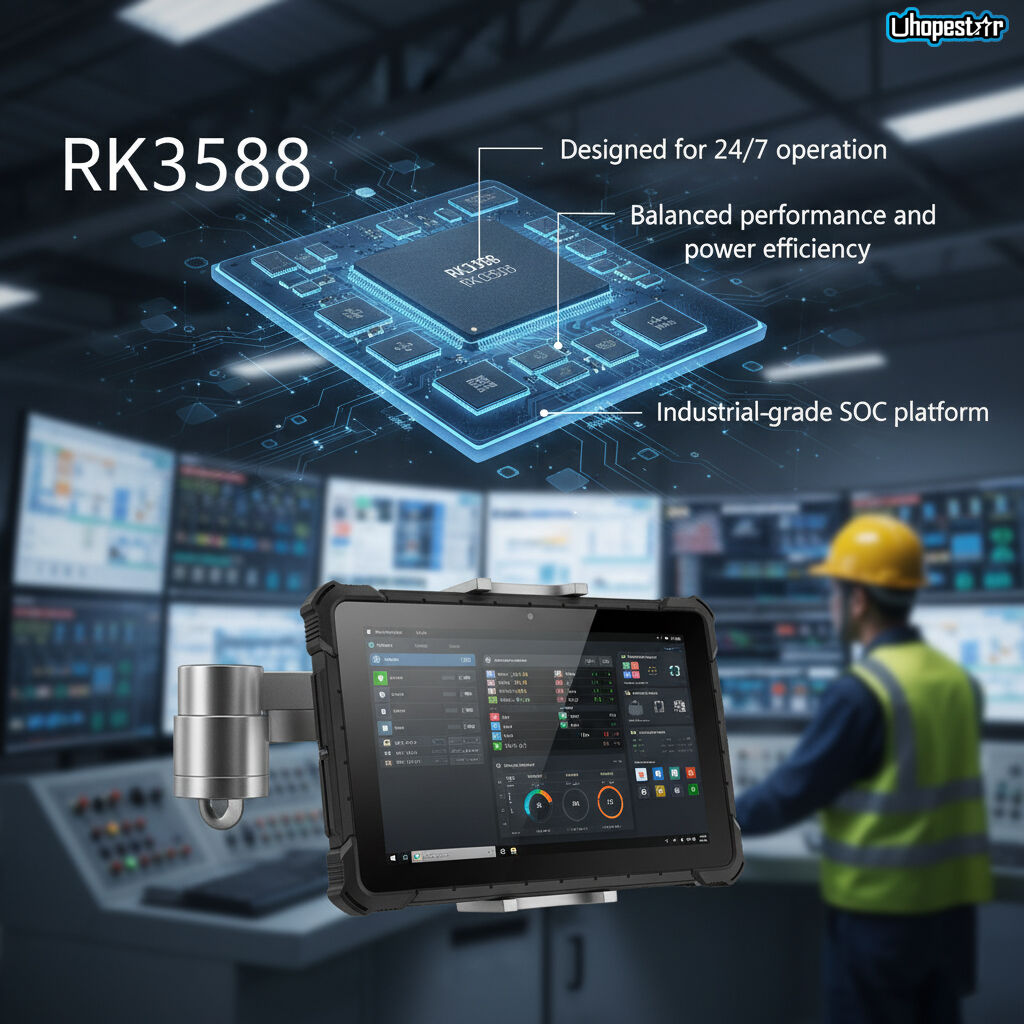
RK3588 provides a balanced solution for Android-based edge systems requiring AI, video, and multi-display integration
For many commercial and industrial applications, Uhopestar selects RK3588 because it delivers sufficient AI capability, flexible interfaces, and stable Android integration without unnecessary system complexity.
Choosing the Right SoC for Multi-Display Edge AI Projects
From Uhopestar’s perspective, selecting an SoC is not about peak performance alone. It involves:
-
Matching AI capability to actual application needs
-
Ensuring long-term software and hardware availability
-
Supporting multi-display and peripheral expansion
-
Maintaining thermal and power stability in real deployments
RK3588 meets these criteria for a wide range of Uhopestar Android products.
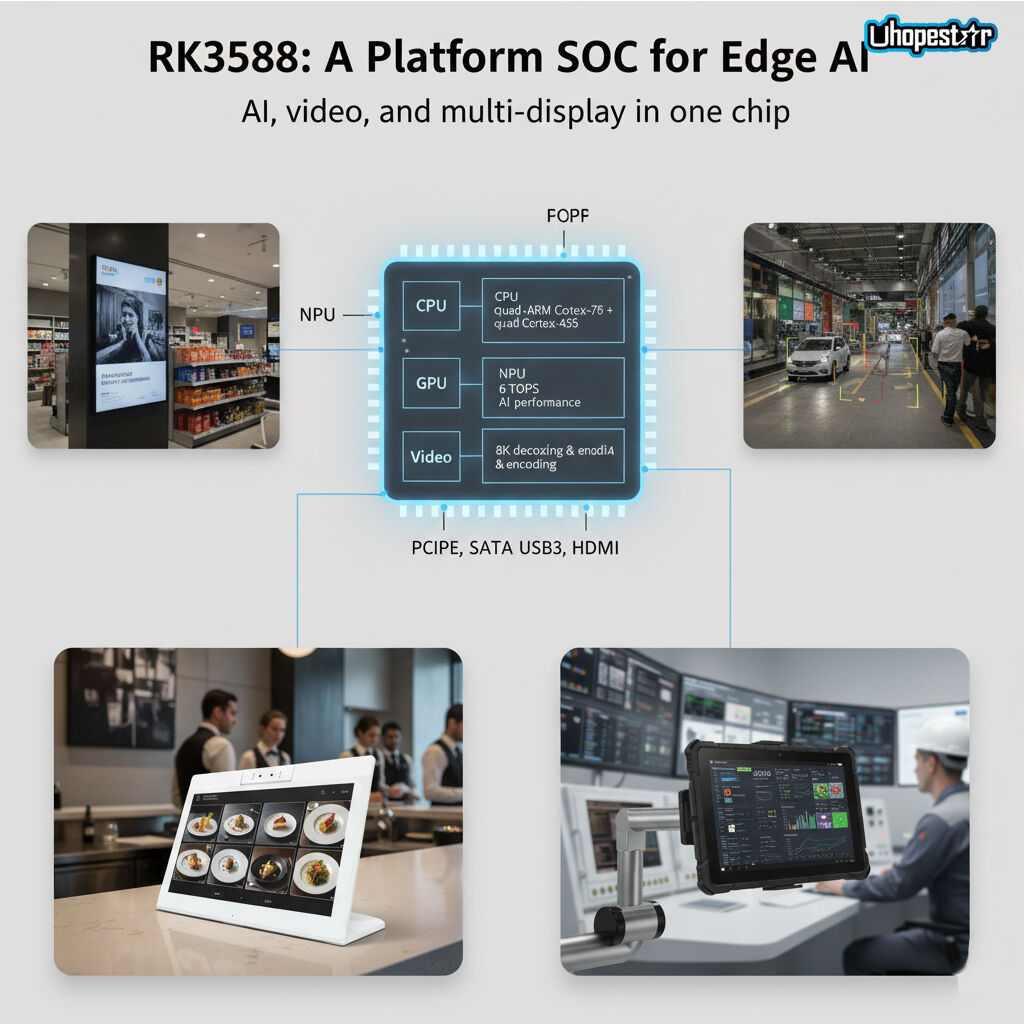
5. Visualizing RK3588 in Uhopestar Systems
To help customers quickly understand system behavior, Uhopestar presents RK3588-based platforms through:
-
Infographics showing CPU core task distribution
-
Visual diagrams illustrating NPU, GPU, and video pipeline roles
-
Short animations demonstrating multi-task workload flow
These visual tools make complex architecture easy to understand for procurement teams, system integrators, and decision-makers.
Conclusion: RK3588 as Part of Uhopestar’s Platform Strategy
At Uhopestar, RK3588 is not presented as a standalone chip feature. It is part of a system-level solution combining:
-
Hardware design
-
Thermal optimization
-
Android system tuning
-
Long-term supply and support
By integrating RK3588 into selected Android tablets and intelligent terminals, Uhopestar delivers ready-to-deploy platforms for edge AI, multi-display systems, and intelligent control applications.
Explore RK3588-Powered Solutions from Uhopestar
-
Read More about Uhopestar commercial Android platforms
-
Subscribe for edge AI and hardware insights
-
Request a Demo of RK3588-based Android products
-
Contact Uhopestar to discuss your application and customization needs
Table of Contents
- Why Uhopestar Chose RK3588 for Advanced Android Solutions
- 1. Technical Fundamentals: Architecture That Supports Real-World Workloads
- 2. Application Enablement: From Chip Capability to Deployable Products
- 3. Industry Perspective: Edge AI Hardware Trends Toward 2026
- 4. Competitive Perspective: Why RK3588 Makes Sense for Uhopestar Products
- 5. Visualizing RK3588 in Uhopestar Systems
- Conclusion: RK3588 as Part of Uhopestar’s Platform Strategy
- Explore RK3588-Powered Solutions from Uhopestar